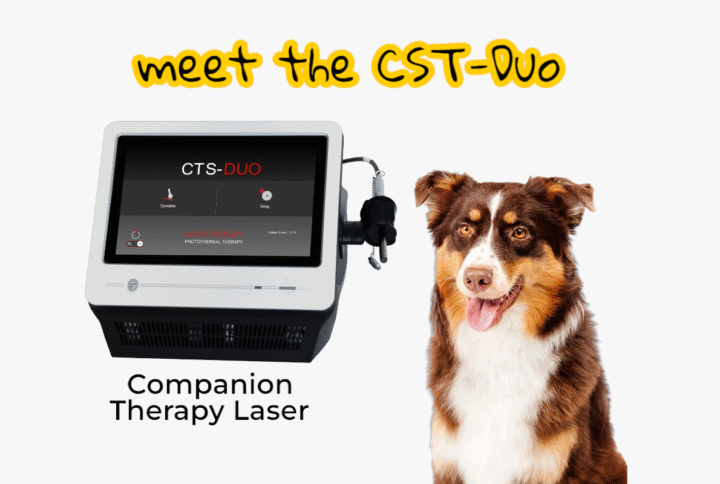
Animal laser therapy, also known as photobiomodulation, is a non-invasive, drug-free, and surgery-free treatment that uses specific wavelengths of light to stimulate healing and reduce pain and inflammation in pets. It’s a growing field in veterinary medicine, offering a gentle yet powerful way to improve an animal’s quality of life.
As pet owners, seeing your beloved furry companions in pain or struggling to move is heartbreaking. We all crave the best solutions that are not only effective but also carry minimal risk and maximum comfort for them. This is where modern therapeutic laser technology enters the arena, offering new hope for many conditions that might previously have required more invasive interventions.
At Theramedicare, we are proud to introduce the Companion CTS Duo Laser System, a leading innovation in veterinary medicine. You might wonder, “Can they truly heal without surgery?“ In many cases, the answer is yes. Let’s dive deeper into how this amazing laser therapy is revolutionizing your pet’s care.
What is the Companion CTS Duo Laser and How Does It Work?
The Companion CTS Duo Laser is an advanced Class IV therapeutic laser system designed specifically for clinical use in animals. Unlike surgical lasers that cut or destroy tissue, this therapeutic laser uses light energy (photons) at specific wavelengths to stimulate the body’s natural healing processes without pain or invasiveness.
The principle behind the CTS Duo Laser’s effectiveness is Photobiomodulation (PBM) Therapy. When the laser light is shone on the painful or injured area, these photons penetrate the skin layers and are absorbed by the mitochondria—the “powerhouses” within the body’s cells. This absorption of light energy triggers a cascade of beneficial biological and biochemical reactions at the cellular level:
Increases ATP Production: Absorbed photons boost the production of Adenosine Triphosphate (ATP), the primary energy currency of cells. Cells with optimal energy can function and regenerate better.
Reduces Acute & Chronic Pain: The laser influences pain signal transmission and promotes the release of the body’s natural endorphins, providing an analgesic effect.
Reduces Inflammation: It’s a powerful anti-inflammatory agent that works at the cellular level, helping to suppress inflammatory responses, reducing swelling, redness, and pain.
Accelerates Tissue Healing: This therapy stimulates cell proliferation, enhances collagen synthesis, and speeds up the formation of healthy new tissue, crucial for wound repair and injuries.
Improves Blood Circulation: Local vasodilation (widening of blood vessels) occurs, increasing blood flow. This brings more oxygen, nutrients, and immune cells to the damaged area, while also aiding in the removal of metabolic waste products.
Enhances Nerve Function: Can help accelerate the regeneration of damaged nerves, restoring sensory and motor function
What Medical Conditions Can Be Treated with the CTS Duo Laser?
The versatility and effectiveness of the Companion CTS Duo Laser make it an invaluable therapeutic option for a wide range of conditions in pets, both acute and chronic cases. Here are some of the most common examples:
Musculoskeletal Issues & Chronic Pain:
Osteoarthritis: Reduces joint pain, inflammation, and improves mobility in dogs, cats, and other animals.
Hip & Elbow Dysplasia: Manages pain and inflammation associated with these degenerative conditions.
Ligament, Tendon, and Muscle Injuries: Such as sprains, strains, or tendonitis, aiding in faster recovery.
Back & Neck Pain: Including mild intervertebral disc disease (IVDD) issues.
Wound Healing & Dermatology:
Post-Surgical Wounds: Accelerates wound closure, reduces swelling and pain after surgical procedures (e.g., after TPLO surgery, spay/neuter, tumor removal).
Burns, Abscesses, & Open Wounds: Promotes healthy skin and tissue regeneration.
Hot Spots & Chronic Skin Lesions: Reduces itching, inflammation, and speeds up healing.
Chronic Ear Infections (Otitis): Reduces inflammation and pain.
Assists in recovery after peripheral nerve injuries or spinal trauma.
Dental & Oral Issues:
Reduces inflammation in gingivitis and stomatitis, and speeds up recovery post-dental extractions.
Unique Feature: Photothermal Therapy for Tumors:
What sets the CTS Duo apart is its ability to perform photothermal therapy for low-grade mast cell tumors. This offers an innovative, non-invasive approach to managing certain skin cancer conditions.
Advantages of CTS Duo Laser Therapy Over Other Methods
Therapy with the Companion CTS Duo Laser offers numerous significant advantages, making it an increasingly preferred option for pet owners and veterinarians alike:
Non-Invasive & Painless: Therapy sessions are generally comfortable for pets, often even having a calming effect. No needles, incisions, or anesthesia are required.
Accelerates Recovery Time: By stimulating the body’s natural healing processes, your pet can return to their normal activities much faster.
Reduces Medication Dependency: For many conditions, laser therapy can reduce or even eliminate the need for anti-inflammatory or pain medications, thereby minimizing potential long-term side effects.
Safe and Effective: When performed correctly by trained professionals, laser therapy has an excellent safety record with no known side effects when used properly.
Enhances Quality of Life: By alleviating pain and improving mobility, laser therapy can dramatically enhance your pet’s quality of life, making them more active, joyful, and happy.
Holistic Approach: Can be used alone or as an excellent complement to other treatment plans, including physical therapy, post-operative care, or other medical therapies.
The Therapy Process: What to Expect?
Laser therapy sessions are typically brief, ranging from 3 to 10 minutes depending on the condition being treated and the size of the body area. The veterinarian or technician will slowly move the laser handpiece over the affected area. Both the pet, owner, and operator will wear special protective eyewear for safety.
Many pets enjoy the pleasant warming sensation during treatment and often become relaxed or even fall asleep. The number of sessions required varies depending on the pet‘s condition and severity.
Give Your Pet the Best Quality of Life at Theramedicare
At Theramedicare, we understand how precious every furry family member is to you. We are dedicated to providing the most effective and comfortable advanced medical care. The Companion CTS Duo Laser System is one of the tools we use to fulfill that commitment.
If your pet is suffering from chronic pain, an injury, or is in post-operative recovery, laser therapy with the CTS Duo might be the solution you’ve been looking for. Don’t let them suffer any longer.
Could your pet benefit from laser therapy? Contact Theramedicare today to schedule a consultation. Our experienced veterinary team is ready to answer your questions and create the best customized treatment plan for your beloved companion’s unique needs. Together, we can help them get back to being active, joyful, and pain-free!
Companion laser therapy represents a significant advancement in veterinary medicine, offering a non-invasive, drug-free approach to treating various conditions in animals. This therapeutic modality utilizes specific wavelengths of light to stimulate healing at the cellular level, providing relief from pain and inflammation while accelerating tissue repair processes. As pet owners increasingly seek comprehensive care options for their animal companions, laser therapy has emerged as a valuable tool in the veterinary practitioner’s arsenal.
The growing popularity of laser therapy in veterinary practices reflects a broader trend toward integrative medicine approaches that combine conventional treatments with complementary therapies. This holistic perspective acknowledges the complex interplay between physical symptoms and overall well-being, recognizing that effective treatment often requires addressing multiple aspects of an animal’s health simultaneously.
Scientific Principles and Mechanism of Action
Basic Physics of Laser Therapy
Companion Laser Therapy employs light amplification by stimulated emission of radiation (LASER) to generate concentrated beams of light at specific wavelengths. In veterinary applications, these wavelengths typically fall within the red to near-infrared spectrum (600-1000 nm), which allows for optimal tissue penetration without causing thermal damage to surrounding structures. 3
The term “photobiomodulation” describes the cellular and biochemical effects that occur when appropriate light energy is absorbed by photoreceptors within the cells. Unlike surgical lasers that cut or ablate tissue, therapeutic lasers operate at lower power densities specifically designed to modulate cellular function rather than destroy tissue. 1
Cellular Response Mechanisms
When Companion Laser Therapy light penetrates into tissues, it interacts with chromophores (light-absorbing molecules) within the cells, particularly in the mitochondria. This interaction triggers a cascade of biochemical events that enhance cellular metabolism and function. Key cellular responses include:
Increased production of adenosine triphosphate (ATP), the primary energy carrier in cells
Enhanced cell membrane permeability, facilitating nutrient intake and waste elimination
Stimulation of cytokine and growth factor production
Increased blood flow and formation of new capillaries (angiogenesis)
Activation of stem cells to promote tissue regeneration
Modulation of inflammatory pathways and reduction of oxidative stress 3
These cellular changes collectively contribute to accelerated healing, reduced inflammation, and decreased pain perception, making laser therapy an effective treatment for a wide range of conditions affecting companion animals. 1
Types of Therapeutic Lasers
Classification by Power Output
Therapeutic lasers used in veterinary medicine are typically categorized based on their power output:
Class III Lasers (Low-Level Lasers): These devices operate at power outputs below 500 milliwatts (mW) and are sometimes referred to as “cold lasers” because they produce minimal thermal effects. Class III lasers were among the first therapeutic lasers used in veterinary medicine, though they have largely been supplanted by more powerful options in clinical settings. 2
Class IV Lasers (High-Power Lasers): Operating at power outputs above 500 mW (typically 1-15 watts in veterinary applications), these lasers can deliver therapeutic doses more quickly and achieve deeper tissue penetration. Most modern veterinary practices utilize Class IV lasers for their efficiency and versatility across a range of conditions.
Wavelength Considerations
The wavelength of laser light determines its depth of penetration and specific therapeutic effects:
Red light (600-700 nm): Penetrates superficially and is effective for surface wounds, dermatological conditions, and shallow tissue injuries.
Near-infrared light (700-950 nm): Penetrates deeper tissues, reaching muscles, tendons, joints, and even deeper structures, making it suitable for treating musculoskeletal and neurological conditions.
Combination wavelengths: Many modern therapeutic laser systems incorporate multiple wavelengths to address different tissue depths and pathologies simultaneously. 3
Clinical Applications in Veterinary Medicine
Pain Management
Companion Laser Therapy has demonstrated significant efficacy in managing both acute and chronic pain conditions in companion animals. By reducing inflammation, improving circulation, and releasing endorphins, laser treatments can provide meaningful pain relief for conditions such as:
For geriatric patients or animals with compromised organ function that cannot tolerate traditional pain medications, Companion Laser Therapy offers a valuable alternative or complementary approach to pain management. Many veterinarians report that integrating laser therapy into multimodal pain management protocols allows for reduced medication dosages while maintaining or improving pain control. 2
Wound Healing and Tissue Repair
One of the most well-documented applications of laser therapy is accelerating wound healing. The photobiomodulation effects stimulate fibroblast proliferation, collagen synthesis, and epithelialization, resulting in faster closure of wounds and improved cosmetic outcomes. Specific wound-related applications include:
Studies have shown that properly administered laser therapy can reduce healing time by 30-50% compared to standard care alone, making it particularly valuable for challenging wounds or compromised patients. 3
Musculoskeletal Conditions
Companion laser therapy shows particular promise in treating various musculoskeletal conditions:
Degenerative joint disease
Tendon and ligament injuries
Muscle strains and tears
Hip dysplasia
Cruciate ligament injuries (pre- and post-surgical)
The anti-inflammatory and tissue-regenerative properties of laser therapy make it especially beneficial for chronic conditions like osteoarthritis, where it can improve mobility and quality of life while potentially reducing reliance on pharmaceutical interventions. 2
Neurological Applications
Emerging research suggests that laser therapy may benefit various neurological conditions through neuroprotective effects and enhanced nerve regeneration:
While more research is needed in this area, preliminary evidence and clinical observations indicate that laser therapy may help preserve neurological function and promote recovery in certain conditions affecting the nervous system. 3
Treatment Protocols and Administration
Dosage Parameters
Effective Companion Laser Therapy requires appropriate dosing based on several key parameters:
Power density: The concentration of power over the treatment area (W/cm²)
Energy density: The total energy delivered per unit area (J/cm²)
Treatment time: Duration of laser application
Treatment frequency: How often treatments are administered (e.g., daily, weekly)
Total number of treatments: Course of therapy required for optimal outcomes 1
These parameters must be adjusted based on the patient’s size, coat color and thickness, skin pigmentation, condition being treated, and treatment goals. Most modern laser systems provide preset protocols for common conditions, though experienced practitioners may customize treatments based on individual patient response. 2
Treatment Technique
Proper administration technique is crucial for optimal results:
Contact vs. non-contact delivery: While some protocols call for holding the laser handpiece slightly above the skin surface, direct contact technique often provides better energy transfer and reduced reflection, enhancing therapeutic effects.
Movement patterns: Slow, methodical movement of the handpiece over the treatment area ensures even energy distribution and prevents overheating of tissues.
Treatment area coverage: Treating not only the primary site of injury but also surrounding tissues and related structures (such as proximal joints or nerve pathways) often yields better clinical outcomes. 3
Most treatments last between 3-10 minutes per site, with the specific duration determined by the condition being treated, the power of the laser system, and the size of the treatment area. 4
Evidence Base and Clinical Research
Current State of Evidence
While Companion Laser Therapy has gained widespread acceptance in veterinary practice, the quality and quantity of research evidence varies by application:
Strong evidence: Wound healing, pain management for osteoarthritis
Moderate evidence: Post-surgical pain and inflammation, tendon and ligament injuries
Limited evidence: Some dermatological conditions, dental applications 2
It’s important to note that much of the current understanding of therapeutic laser effects comes from human medicine research, laboratory studies, and clinical experience rather than large-scale controlled trials in veterinary patients. This reflects the general challenge of conducting rigorous clinical research in veterinary medicine. 3
Ongoing Research Directions
Current research in veterinary Companion Laser Therapy is focused on several key areas:
Optimizing treatment parameters for specific conditions
Investigating synergistic effects with other therapies
Exploring novel applications in oncology supportive care
Developing objective outcome measures to better quantify clinical benefits
Establishing evidence-based protocols for various species and conditions 1
As research continues to evolve, the scientific understanding of laser therapy mechanisms and applications is likely to become more refined, potentially expanding its utility in veterinary medicine. 4
Safety Considerations and Limitations
Safety Protocols
While therapeutic lasers are generally considered safe when properly used, important safety considerations include:
Eye protection: Appropriate protective eyewear must be worn by all personnel and should be considered for patients during treatment.
Contraindications: Laser therapy should be avoided directly over malignancies, areas of active hemorrhage, the eyes, growth plates in young animals, and pregnant uteri.
Heat sensitivity: Patients should be monitored for signs of discomfort during treatment, particularly when using higher-powered devices.
Operator training: Proper training is essential to ensure safe and effective treatment delivery. 2
Limitations and Considerations
Despite its benefits, laser therapy has certain limitations:
Depth of penetration: Even high-powered lasers have limited penetration depth (typically 2-5 cm), which may reduce efficacy for very deep tissues or large patients.
Treatment course requirements: Multiple treatments are typically required for optimal outcomes, which requires owner commitment and may increase overall treatment costs.
Variability in response: Individual patients may respond differently to treatment, and some conditions may be more responsive than others. 3
Integration with Conventional Veterinary Medicine
Multimodal Approach
Laser therapy is most effectively utilized as part of a comprehensive treatment plan rather than as a standalone therapy. Integration with conventional approaches may include:
Adjunct to pharmacological management: Laser therapy can enhance the effects of medications or potentially allow for reduced dosages.
Post-surgical rehabilitation: Combined with appropriate physical rehabilitation techniques, laser therapy can accelerate recovery and improve functional outcomes.
Chronic disease management: For conditions like osteoarthritis, combining laser therapy with weight management, appropriate exercise, and medications often yields the best results. 4
This integrative approach acknowledges that complex medical conditions typically benefit from addressing multiple aspects of pathophysiology simultaneously. 1
Future Directions and Emerging Applications
Technological Advances
The field of veterinary laser therapy continues to evolve with technological innovations:
Multi-wavelength systems: Newer devices incorporating multiple wavelengths can target different tissue depths and pathologies simultaneously.
Pulsing protocols: Advanced pulsing patterns may enhance specific therapeutic effects while minimizing tissue heating.
Portable and affordable options: More compact and cost-effective systems are making laser therapy accessible to a wider range of veterinary practices.
Integration with digital health platforms: Some systems now offer cloud-based protocol libraries and treatment tracking capabilities. 2
Emerging Clinical Applications
Promising areas for future development include:
Neurological rehabilitation: Enhanced protocols for spinal cord injuries and neuropathies
Dental applications: Management of oral pain and acceleration of healing after dental procedures
Oncology supportive care: Reducing side effects of radiation and chemotherapy
Metabolic conditions: Emerging research on effects of photobiomodulation on metabolic processes 4
Conclusion
Companion laser therapy represents a valuable addition to the veterinary therapeutic toolkit, offering a non-invasive, drug-free option for managing pain, inflammation, and tissue healing in companion animals. While the evidence base continues to develop, clinical experience and existing research support its efficacy for numerous conditions when appropriately administered as part of a comprehensive treatment approach.
As research advances and technology evolves, laser therapy is likely to become increasingly refined and integrated into standard veterinary care protocols, potentially expanding its applications and improving outcomes for veterinary patients. For pet owners seeking complementary approaches to conventional treatments, laser therapy offers a scientifically-grounded option that can enhance their companion animal’s comfort, mobility, and quality of life.